| Version | 1.0 |
| Created | 02/03/2026 04:02 |
| Last Updated | Never |
Pearson Field Operations Guide
Background:
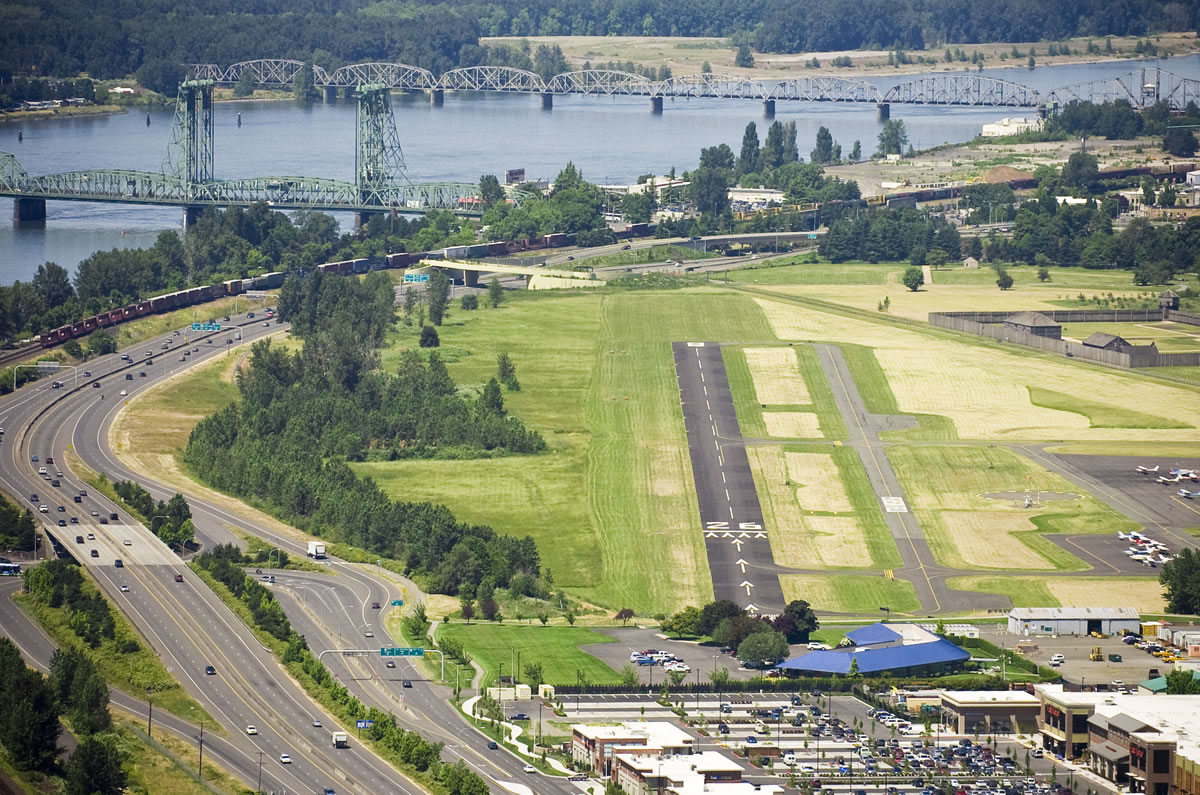
Pearson Field (KVUO), also known as Pearson Airpark, is a small non-towered airport located 3 nautical miles northwest of Portland International Airport (KPDX) in Vancouver, Washington. Due to its proximity to KPDX, the FAA designated Pearson Fields airspace as a Special Flight Rules Area (SFRA), and procedures unique to Pearson were created to mitigate risks associated with the proximity of Pearson and Portland traffic.
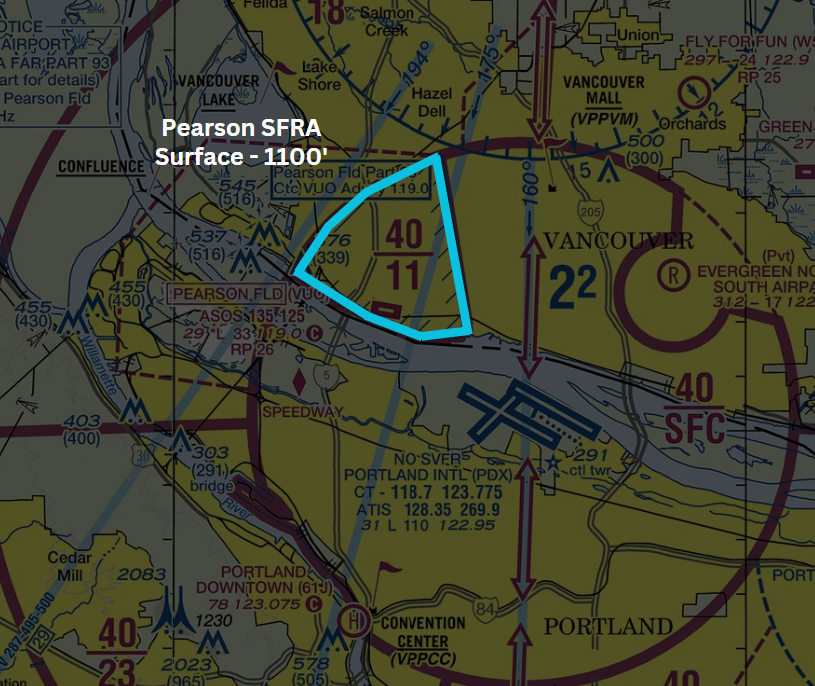
Pearson SFRA
Pearson's SFRA is depicted below and extends from the surface up to but not including 1,100 feet MSL. The traffic pattern altitude is 1029 feet MSL.
Regulation surrounding Pearson Field: FAR Part 93 Subpart N
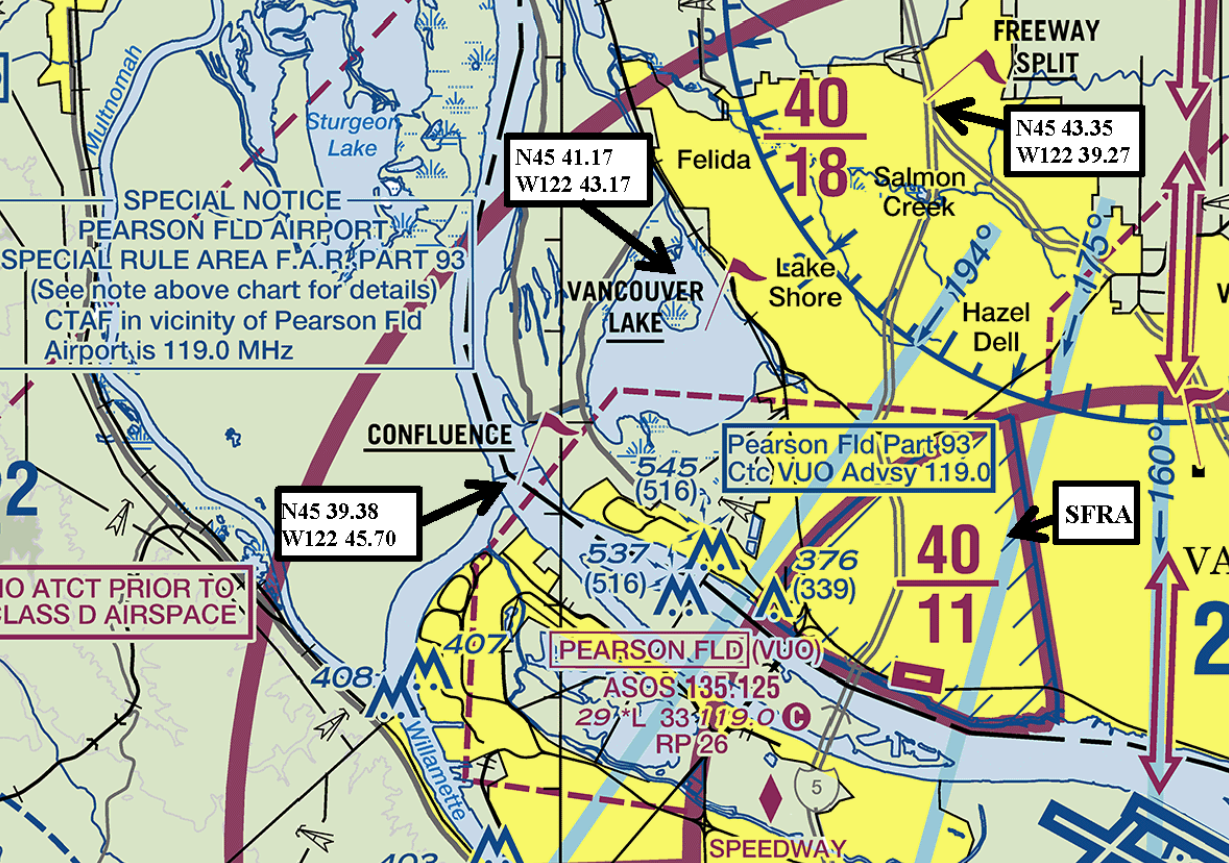
Common VFR reporting points
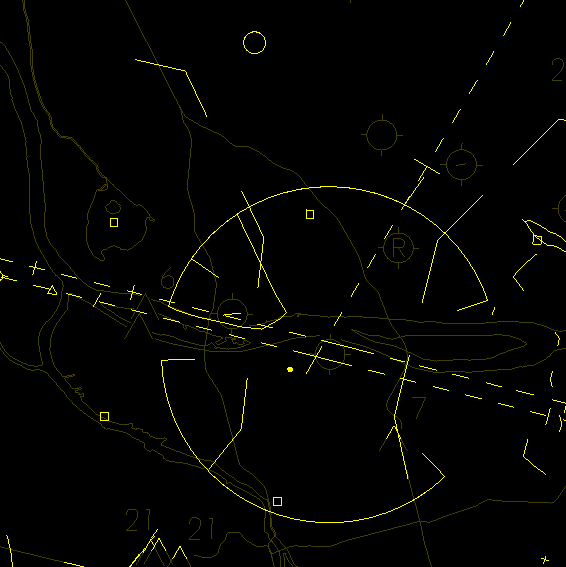
Map 88
Pilot Info
There is no control tower at Pearson Field. Mandatory advisory service is provided by Portland Tower (PDX) on frequency 119.0 (“Pearson Advisory”). The purpose of the advisory service is to provide traffic advisories to pilots operating to/from Pearson Field regarding aircraft arriving/departing at PDX.
VFR arrival/departure procedures:
- Pilots should obtain the weather prior to contacting Pearson Advisory.
- Pilots must not enter Portland Class Charlie Airspace.
- Make right traffic pattern when operating on runway 26, and left traffic pattern when operating on runway 8.
- Pilots are required to establish and maintain two-way communications with Pearson Advisory on 119.0 prior to departing Pearson or entering the SFRA.
- When operating over the runway or extended runway centerline of Pearson Field Runway 8/26, maintain an altitude at or below 700 feet mean sea level.
- Once communications have been established with Pearson Advisory, the pilot must monitor the frequency and may make appropriate traffic advisory calls over the CTAF (Common Traffic Advisory Frequency).
Example:
Pilot: “Pearson Advisory, N734LQ at Pearson, departing northwest bound with the Pearson weather.”
Pearson Advisory (PA): “N734LQ, Pearson Advisory, remain outside Charlie airspace, Portland landing runways one-zero, caution wake turbulence, traffic 2 miles west of Pearson Heavy Boeing 747 landing runway 10R.”
Controllers
Frequency
PDX Local Control 1 (LC1) is delegated the responsibility of the Pearson Advisory (PA) frequency. The responsible controller must add the “PDX_V_TWR” frequency (119.0) and TX/RX (Transmit & Receive) on both the Pearson Advisory and LC1 frequency simultaneously.
When communicating with pilots operating in the SFRA, LC1 shall identify themselves as “Pearson Advisory”. When communicating with pilots operating out of Portland (PDX) they shall identify themselves as “Portland Tower”.
Special Visual Flight Rules (SVFR)
Pearson Field is located in a Class Echo airspace, which starts at the surface. The basic VFR weather minimums per 14 CFR 91.155 are 3 statute miles visibility, 500 feet below, 1,000 feet above, and 2,000 feet horizontally from clouds. However, pilots may require lower minimums to operate into or out of an airport. With clearance from ATC, pilots may operate their aircraft (except helicopters) under Special VFR with a minimum flight visibility of 1 statute mile and remain clear of clouds. 14 CFR 91.157
When a pilot requests an SVFR clearance into or out of PDX, LC1 must coordinate with LC2, P80 NORTH Sector (RWY 28 in use), or P80 FINAL Sector (RWY 10 in use). The clearance is issued before the aircraft is authorized to maintain Special VFR conditions.
Example:
Pilot: “Pearson Advisory, N734LQ at Runway 8, departing northbound, requesting special VFR, with the Pearson weather”
Pearson Advisory (PA): “N734LQ, Pearson Advisory, say aircraft type”
Pilot: “N734LQ, Cessna 172”
Pearson Advisory (PA): “N734LQ, on request”
*Pearson Advisory coordinates with LC2 and NORTH or FINAL
Pearson Advisory (PA): “North, Pearson Advisory, APREQ”
P80 (N): “Go for North?”
Pearson Advisory (PA): “N734LQ, Cessna 172 requesting Special VFR out of Pearson to the north”
P80 (N): “Special VFR approved, AN”
Pearson Advisory (PA): “TP”
Pearson Advisory (PA): “N734LQ, Cleared out of the Echo surface area north of Pearson Field Airport. Maintain Special VFR conditions and remain outside Charlie airspace. Report exiting Echo airspace on this frequency.”
Pilot: “N734LQ, will maintain Special VFR conditions north of Pearson Field, remain outside of Charlie airspace, and advise when exiting the Pearson surface area.”
Pilot: “N734LQ, exiting the Pearson surface area.”
Pearson Advisory (PA): “N734LQ, frequency change approved.”
*Pearson Advisory must advise NORTH or FINAL and LC2 when the SVFR operation is complete.
Pearson Advisory (PA): “North, Pearson Advisory information.”
P80 (N): “Go for North?”
Pearson Advisory (PA): “Special VFR operation is complete.”
P80 (N): “AN”
Pearson Advisory (PA): “TP”
*The coordination process is the same for LC2.
IFR Traffic to/from Pearson
Pearson Departures:
Because Pearson is uncontrolled, only one aircraft is permitted to operate under IFR (Instrument Flight Rules) into or out of Pearson at a time. While an aircraft under IFR is operating out of Pearson, it must be protected from any other IFR traffic. This is accomplished by the issuance of an IFR departure release clearance, a window of time that a pilot is allowed to depart. After this window of time, the clearance will become void, and the pilot will have to request another release if they did not depart in time.
Pearson Advisory (PA) is responsible for issuing IFR clearances to aircraft departing KVUO. Any aircraft flying to Salem (SLE) must cruise at 5,000 ft. IFR clearances should be issued as follows:
PDX WEST FLOW (28L/R): NORTH (N) sector frequency 124.35
PDX EAST FLOW (10L/10R): FINAL (F) sector frequency 126.9
C - “Cleared to (clearance limit)”
R - “Published IFR obstacle departure procedure, BTG V-O-R, (then as filed or route)”
A - “Maintain 4000, expect (filed altitude) five (5) minutes after departure”
F - “Portland Departure (NORTH or FINAL)”
T - “Squawk XXXX”
If BTG VOR is being simulated out-of-service (OTS), Pearson Advisory should obtain the pilot's intended departure runway. Replace the R (Route) from the above template as follows:
R - “After departure, turn *left/right heading 3-6-0, leaving 2,000, expect radar vectors to (route or fix)”
*If the pilot departs runway 8, say “left”. If the pilot departs runway 26, say “right”
Example:
Pilot: “Pearson Advisory, N734LQ requesting IFR clearance to Renton Municipal Airport (KRNT), we have the Pearson weather”
*Pearson Advisory must print a flight progress strip for all VUO IFR departures.
Pearson Advisory (PA): “N734LQ, Pearson Advisory, cleared to Renton Municipal Airport, published IFR obstacle departure procedure, Battle Ground V-O-R, then as filed, maintain four thousand, expect one-zero thousand, five minutes after departure, Portland departure 124.35, squawk 1234”
Pilot: *Reads back clearance correctly
Pearson Advisory (PA): “N734LQ, readback correct, hold for release, advise ready for departure this frequency.”
Pilot: “Pearson Advisory, N734LQ ready for departure.”
*Pearson Advisory (PA) coordinates with the appropriate P80 sector and LC2 to stop all IFR RWY 28L/R and RWY 3 departures. Once a release has been granted from P80, Pearson Advisory (PA) will issue an IFR release and ensure the aircraft departs within two (2) minutes. P80 must point out all VUO IFR departures to LC1.
Pearson Advisory (PA): “N734LQ, released for departure, clearance void in two (2) minutes, if not off in two (2) minutes, advise this frequency of your intentions.”
Pilot: “Released for departure, clearance void in two (2) minutes, N734LQ.”
Pearson Advisory (PA): “N734LQ readback correct, contact Portland Departure airborne.”
Pilot: “Contact Portland Departure airborne, N734LQ.”
Pearson IFR arrivals:
Once the aircraft is cleared for the approach, no other IFR departure may be released out of Pearson until the arriving IFR aircraft cancels its IFR clearance. Pearson IFR arrivals will be handed off by approach to Pearson Advisory no later than the Final Approach Fix (FAF) JABKI. Once on your frequency, issue advisories as needed. If the pilot must execute a missed approach, hand them off to P80 and coordinate.
When PDX is in 10 (east) flow:
P80 will verbally coordinate any Pearson IFR arrivals with LC1/2 and point out the VUO IFR arrival to LC1. They will transfer communications of the inbound aircraft to Pearson Advisory (PA) before they reach the Final Approach Fix (FAF) JABKI. They must advise PDX when the IFR arrival cancels IFR or initiates an unplanned missed approach. Pearson Advisory (PA) must advise P80 when the IFR arrival lands and cancels IFR or initiates an unplanned missed approach.
When PDX is in 28 (west) flow:
P80 must verbally coordinate all Pearson IFR arrivals with LC2 and initiate a “call for release” for all PDX departures departing runway 28L/R or runway 3. P80 will transfer communications of the inbound aircraft to Pearson Advisory (PA) before they reach the Final Approach Fix (FAF) JABKI. If the aircraft cancels IFR or initiates an unplanned missed approach, advise PA and LC2. Advise LC1/2 when normal automatic releases may resume.
LC1/2 must advise P80 of any departures on the runway, those cleared for takeoff, or airborne and not yet transferred to P80. They must also advise P80 when the IFR arrival lands and cancels IFR or initiates an unplanned missed approach.
Example
*N734LQ is inbound on the RNAV (GPS)-B approach to Pearson (VUO), PDX is in WEST flow
P80 (N): “Local 2, North, information.”
LC2: “Go for Local 2?”
P80: “N734LQ, Cessna 172 inbound to Pearson on RNAV-B, 5 minutes out from JABKI, all departures call for release.”
LC2: “Roger, call for release TP.”
P80 (N): “AN”
*LC2 relays information to LC1
P80 (N): “N734LQ, radar services terminated, contact Pearson Advisory, 119.0.”
Pilot: “Radar services terminated, contact Pearson Advisory 119.0, N734LQ.”
Pilot: “Pearson Advisory, N734LQ over JABKI on the RNAV-B with the Pearson Weather.”
Pearson Advisory (PA): “N734LQ, Pearson Advisory, Portland departing runways two-eight, no traffic observed between you and the field, report IFR cancellation or missed approach.”
Pilot: “N734LQ, has landed, cancel IFR.”
Pearson Advisory: “N734LQ, IFR cancellation received, good day!”
Pearson Advisory (PA): “North, Pearson Advisory”
P80 (N): “Go for North?”
Pearson Advisory (PA): “N734LQ, cancel IFR”
P80 (N): “Roger, resume automatic releases.”
Pearson Advisory (PA): “TP”
P80 (N): “AN”
*PA informs LC2 of automatic releases
Pearson IFR arrival that cancels airborne
If the pilot cancels IFR once visual with the field, advise them that you received their IFR cancelation, instruct them to squawk VFR (1200), and provide advisories as applicable.
PDX departures shall be called for release when in 28 flow with a VUO IFR arrival inbound; therefore, P80 should resume normal automatic releases once the VUO arrival cancels IFR
Example:
Pilot: “Pearson Advisory, N734LQ over JABKI on the RNAV-B with the Pearson Weather”
Pearson Advisory (PA): “N734LQ, Pearson Advisory, Portland departing runways two-eight, no traffic observed between you and the field, report landing.”
Pilot: “N734LQ will report landing.”
Pilot: “N734LQ, field in sight, cancel IFR, planning right downwind runway 26”
Pearson Advisory (PA): “N734LQ, IFR cancellation received, Squawk 1-2-0-0, remain outside Charlie airspace, caution wake turbulence, traffic 4 miles west of Pearson, west-bound, Heavy 787, climbing”
Pilot: “Squawk 1-2-0-0, remain outside of Charlie airspace, traffic in sight N734LQ.”
Pearson Advisory (PA): “North, Pearson Advisory.”
P80 (N): “Go for North?
Pearson Advisory (PA): “N734LQ canceled IFR.”
P80 (N): “Roger, resume automatic releases, AN.”
Pearson Advisory (PA): “Automatic releases, TP.”
*PA informs LC2 of automatic releases
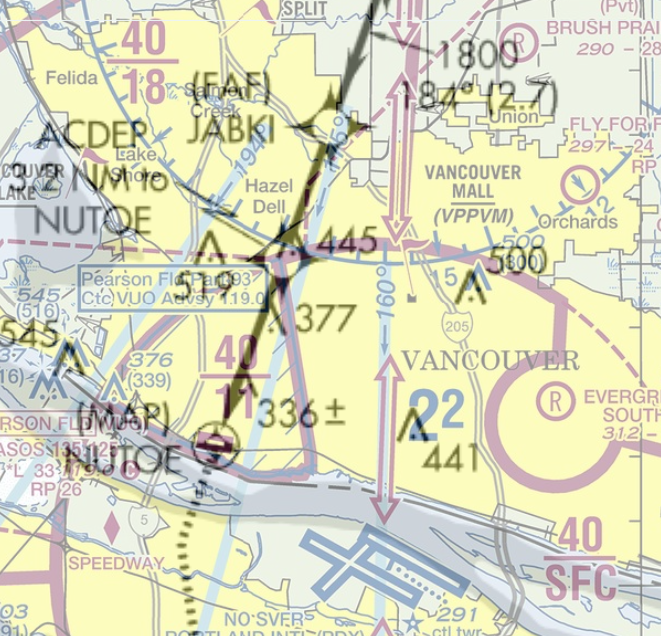
RNAV(GPS)-B to KVUO
Sources
- vPDX 7110.10 (PDX Standard Operating Procedures)
- P80-PDX LOA (Letter of Agreement)
- Special VFR in FAA JO 7110.65
- FAA Letter to Airmen LTA-PDX-10 (Special Flight Rules Area - Pearson Field)
- City of Vancouver Pearson Field Airport Information
- Real-world video example of VUO operations
- Pearson published obstacle departure procedure
